The Best Spanish Grammar Books and Workbooks (2026)
For the last couple years, I've been obsessed with Spanish grammar books. I've read several of the most popular ones front to back and spent dozens of hours flipping through others. Here's my take on the best of the best.
Disclosure. The reason I've been so obsessed with Spanish grammar books: I've been busy writing The Animated Book of Spanish. Of course, I think it's awesome and you should use it, but I've labelled it as my own and tried to compare it honestly on this page. Also, I hate that I have to say this now, but I actually wrote all these reviews - not AI.
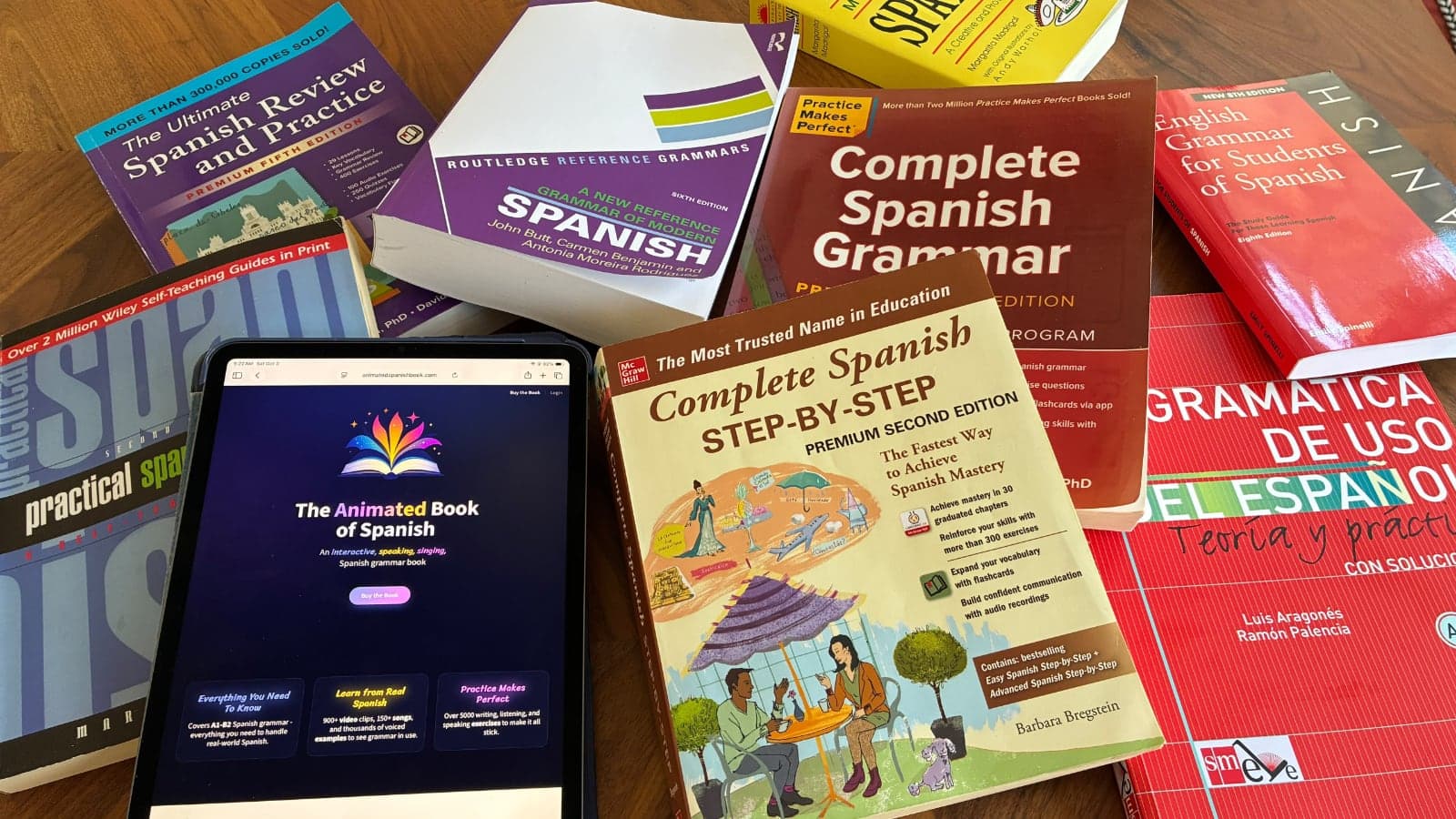
My precious Spanish grammar book collection
The Quick Version
Individual reviews below.
Top Pick Overall
The Animated Book of Spanish
If you're open to a digital experience, the narrative approach, voiced examples, speech recognition, and use of real video and music to illustrate grammar points make this a fantastic resource for learning Spanish grammar.
An interactive grammar book with a gentle progression for absolute beginners, with audio, speaking practice, and thousands of exercises.
My Review
So, to be up-front: I wrote this one. But if I didn't really think I could improve on the other books on this list, then I wouldn't have bothered spending the last two years of my life making it.
The Animated Book of Spanish is an interactive, digital Spanish grammar book in which I attempt to use technology to improve the traditional grammar book instead of making a game-ified language learning app. I wrote it in an encouraging, casual voice and attempted to narrate learners through not just the essential information, but the process of learning Spanish as a second language.
Being digital, it has a lot of advantages over paper books. Absolutely everything has audio - and you don't have to download an abandoned app or download mp3s to hear it. Grammar points are reinforced with video clips from popular Spanish series, modern pop songs, and animations - the pages themselves progressively reveal themselves as you work through them. There are thousands of exercises (all with audio), many inline with the instructional text to provide immediate practice on what you just learned. I tried to balance the depth by containing the more technical explanations in hover pop-ups and info boxes.
The book also incorporates speech recognition - both to practice repeating back the thousands of example sentences and in speaking exercises. A grammar book alone will never make you a fluent speaker, but these will help in building confidence getting Spanish sentences coming out of your mouth at a very early stage.
Downsides? Some people will just prefer a tangible, paper resource - in that case, there are some great options that I've reviewed honestly on this page. Also, despite my best efforts, The Animated Book isn't intended as a mobile experience - so you'll need a computer or tablet to get the most out of it. It's also more expensive than most things on this list, but I hope the added value justifies the price.
I really, genuinely, truly think this is the best way to learn Spanish grammar. There's a one-week money-back guarantee, so you've got nothing to lose by trying it. Even if you don't like it, shoot me an email and tell me about your experience with it. I'd love to hear from you.
Strengths
Tons of audio in examples and exercises
Casual, friendly tone
Speaking practice through speech recognition
Grammar use shown through native video clips and songs
Exhaustive, with very technical details separated visually
Strikes the right balance between depth, pace, and exercises. My top pick for a (physical) book to teach yourself Spanish.
My Review
I have almost no complaints about this book. Some illustrations would be nice, and I wouldn't mind some more discussion in places - but for a self-learning text, I think it does a great job presenting important information in small punchy sections that surface the most important stuff you need to know.
Unlike some other books on this list, this one feels like it was written by someone that actually knows what it's like to learn Spanish from scratch. The book opens with a brief discussion of pronunciation and stress and gives you the essentials about nouns, articles, and adjectives before launching you into the present tense. It only returns to a more detailed unit on those fundamentals once you've had a chance to build some confidence.
There are fewer exercises than some of the dedicated workbooks, but there's enough here to provide sufficient practice. The full sentence translations force you to reuse what you've already learned, and they're designed well enough that you won't feel over your head as you work through the book.
Overall, it's just very well done. The progression makes sense, chapters lead with the most cogent information and end with the edge cases, and it feels like a true guide through the language instead of a reference or list of rules. Two thumbs up.
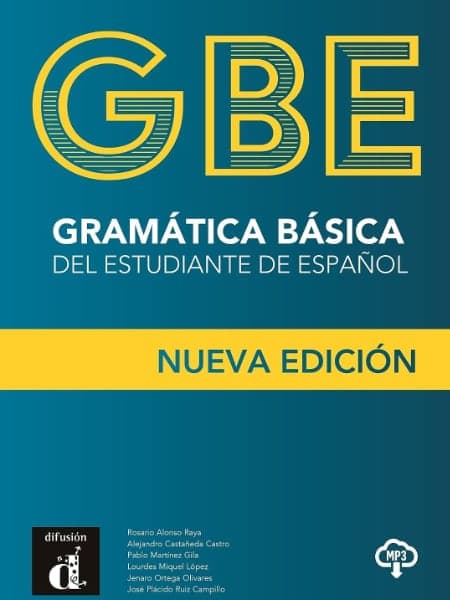
If you're looking for a good workbook full of fun illustrations and design, this is the one. All in Spanish, though.
My Review
Whether or not I recommend this depends on one thing: do you want to learn Spanish in Spanish? On one hand, using a text in Spanish provides a level of immersion that can be fun and motivating. On the other, it can be frustrating and cause you to miss a lot of the nuance when you start skimming and skipping all that text you don't understand.
If you want my opinion, I think absolute beginners should probably opt for learning the basics in English, at least if you are teaching yourself. If you are looking for something to supplement the classroom or a tutor, or already have some basic Spanish under your belt, then I think an all-Spanish resource makes more sense.
Anyway, if you decide you don't mind instructions, explanations, everything in native Spanish, then I think this is a great workbook. Colorful, visually fun design, tons of illustrations, and plenty of actual discussion and explanation (again, in Spanish) of grammar points. It also has a ton of actual text to read apart from the example sentences like little dialogues, articles, and stories. The structure is solid and I really like the progression - it spends 100 pages building up fundamentals before diving deep into verbs, which I think is the right approach.
For advanced beginners, or just really motivated learners that get excited by immersion, this is my top pick for a workbook that's a ton of fun to scribble in and work through.
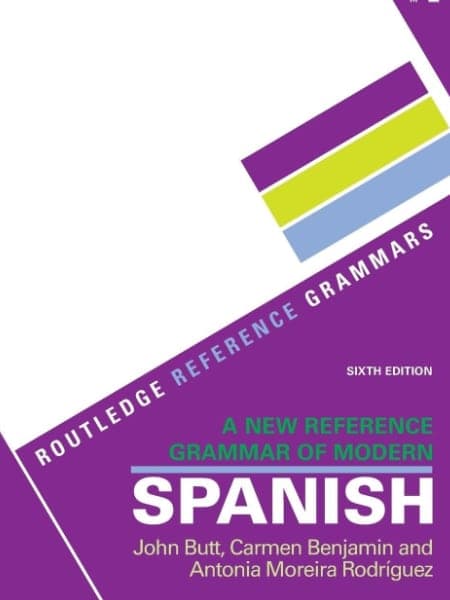
An outstanding reference grammar that every bona fide Spanish grammar nerd should own.
My Review
Known affectionately as "Butt and Benjamin," this is the indisputable bible for the aspiring Spanish grammar aficionado. It's a thick, rigorous, technical tome that contains the answer to every Spanish grammar question you'll ever have, as well as to the many more you will never think to ask.
This is a grammar reference, not a book that one just works through cover to cover (so no exercises). It borders on academic but is written to be accessible to the lay person, with deep paragraphs-long discussions about things that other books would only mention with a quick example.
It'll put you to sleep if you just try to read it straight. Come to it when motivated by curiosity or something you found confusing in the classroom or another book. Then marvel as you learn that there is more nuance to Spanish object pronouns than you ever dreamed possible.
Strengths
Indisputably the best Spanish grammar reference
Extremely in-depth explanations and discussion
Nicely laid out - good use of white space given the density of content
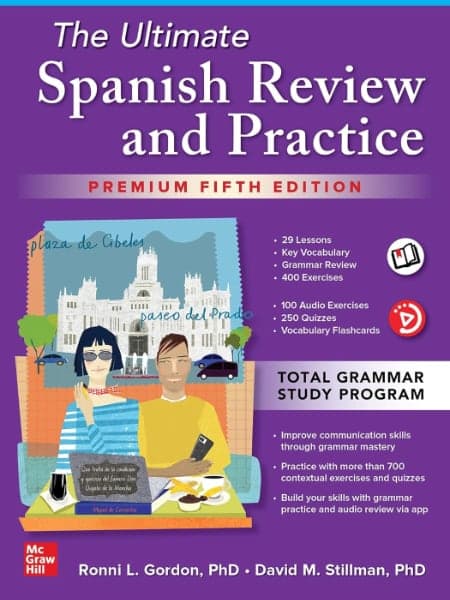
Ronni L. Gordon & David M. Stillman · 2023 · $20.00
The Verdict
A very solid Spanish grammar textbook with tons of exercises and clear explanations. Dry as a bone, though.
My Review
The Ultimate Spanish Review markets itself for "advanced beginners" - and it does in fact launch straight into a detailed review of the present tense without even touching basics like the alphabet, stress, or gender. It assumes you're coming in with a basic knowledge of how Spanish works and assumes you want to be there - it wastes no words on trying to make any of this fun.
However, as long as you're not looking for a gentle on-ramp or fun-filled workbook, this one is an excellent, exhaustive, and exercise-filled resource suited for self-learners or classroom study. It's got strong textbook vibes - no illustrations, dry prose, and very little attempt to make anything visually interesting (it lacks even tables, info-boxes, or other flourishes to break up the page). But the content itself is well done: explained clearly with comprehensive coverage of everything any reasonable person would ever want to know about Spanish grammar.
It's structured more like a reference than a guided textbook. As I mentioned, it opens with present tense, followed by 200 pages covering every other verb tense before it even touches nouns, numbers, or gender. But as long as you're willing to jump around and create your own roadmap, the sheer amount and variety of exercises makes this a solid option for someone serious about teaching themselves.
One final note: it advertises itself as having hundreds of "audio exercises" and quizzes accessible via an app. I haven't downloaded the app, but many reviewers online say it's more trouble than it's worth.
Strengths
Exhaustive coverage
Clear explanations
Tons of varied exercises
Great as a reference
Weaknesses
Not for noobies. Need some basic Spanish knowledge going in.
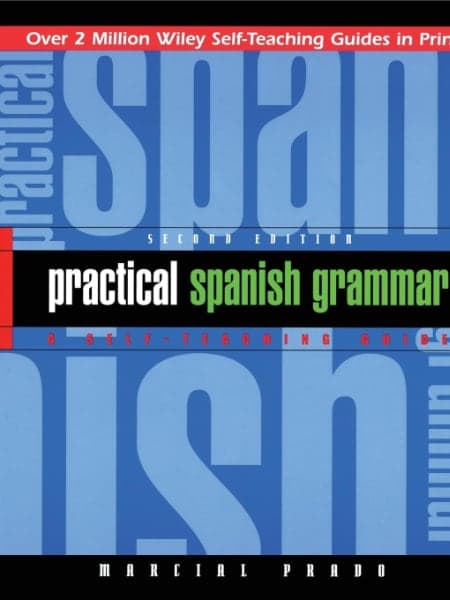
Exceptional discussion of grammar points and lots of exercises, but old and ugly.
My Review
There's a lot I like about this book. I think it has one of the best progressions of all the options on here, it combines effective numbered-list points with actual discussion, and I like how it opens each chapter by motivating the topic with an actual dialogue. It sells itself as a self-teaching guide and I think it lives up to that - it anticipates and does a good job offering insights and fun factoids that might normally come from a good teacher. Lots of exercises break up the instruction and nice "key point" summaries conclude every chapter.
It does, however, have some things holding it back. For one, it's just old. Even the 1997 edition admits it didn't update much from the original 1983 release, and it's filled with examples and scenarios that just feel antiquated. It has no index, which makes it very annoying to use as a reference. It's filled with typos, repeat "new" vocab, and dense pages that desperately need some white space. It's just kind of an ugly text.
Despite the setbacks, I still think the quality of discussion around grammar points is better than most books on this list. It's not a bad option for teaching yourself Spanish.
Strengths
Good, insightful discussion
Lots of exercises
Good pedagogy: intro dialogues, key point summaries
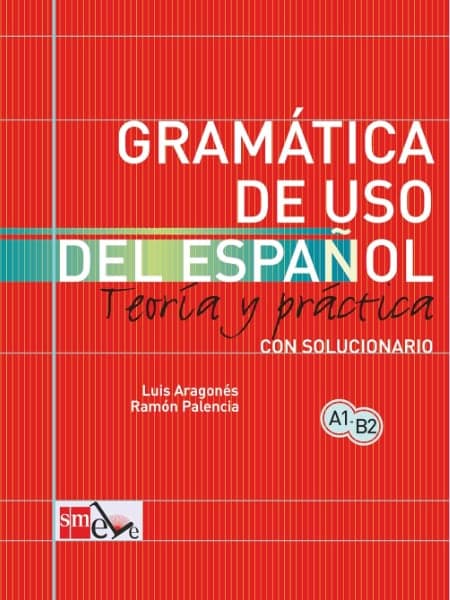
A fun, delightful workbook whose one-page lessons sometimes lead to dense, bullet-point explanations.
My Review
This book is structured as 126 two-page lessons: theory on the left, practice on the right. This thing is workbook heaven - large pages, tons of doodles, little illustrations talking to each other, and fill-in-the-blanks make it a satisfying experience to fill in the pages with your own pen.
The biggest issue for the Spanish beginner is that it's all in Spanish - titles, instructions, explanations, exercises, everything Spanish. And it's not easy Spanish. There's no attempt to pace or cater the native text for a learner, though the abundant illustrations and tables do help to make things understandable. This might appeal to certain types of learners that like to dive into the deep end, but this is a book that is probably best worked through in a classroom setting. Self-learners are going to spend their time puzzling through what anything actually says instead of really absorbing the nuances of what is being taught.
The two-page format is an advantage and a weakness. Many units are elegantly self-contained and progress extremely gradually, with immediate opportunity to practice what you just learned. But some concepts are just more substantial than one page can fit. The book divides these into multiple units, but pages can devolve into dense lists of bullet points that are generally comprehensive in their coverage while not really making an attempt to connect dots and provide insight (made worse because everything is in the very language you are learning). While the illustrations and exercises keep things engaging, many of the explanations amount to one-sentence bullet points of "this is how it's done." For a book with such fun design, the instruction itself can suffer from the worst criticisms of learning grammar (memorizing dry, boring lists).
As someone who can now easily understand all that Spanish, I really like this book. As a total beginner, though, I think learning a language is already challenging enough - I prefer to dedicate my limited brain power to actually learning the language instead of trying to decipher instructions and explanations in a language I don't understand yet. But if you like diving straight in or have a teacher to work through this one with, it's a delightful option especially for those that like doodly, fill-in-the-blank workbook goodness.
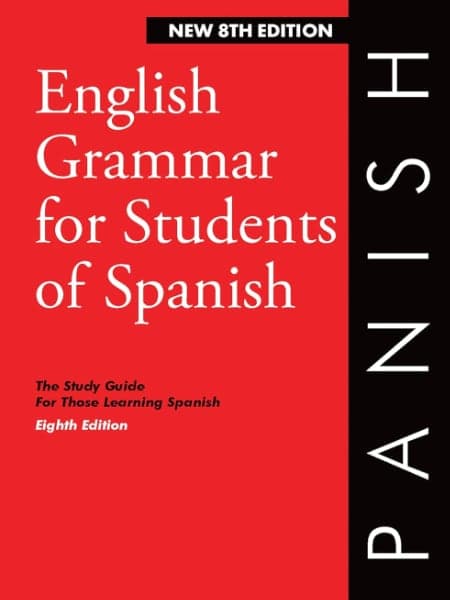
A light recommendation only to those that need to learn basic grammar terms and concepts from scratch.
My Review
This isn't really a book that teaches you Spanish. It admits to that itself when it frequently refers you back to "your textbook" and "your teacher." So I'm going to review it keeping in mind that this is a resource meant to supplement another more rigorous book or teacher.
The book's entire approach leans hard into the assumption that explaining a target language's grammar using your native language is useful. That's an assumption that I think most will agree with, but using English grammar as the primary guide through learning Spanish results in a path that at times feels awkward, though I think it works well to make grammar concepts easy to understand more generally. To be fair, that is how this book advertises itself in its own title.
Since it does focus on grammar more generally, its explanations of Spanish sometimes suffer. As just one example, I found the discussion of ser vs. estar way too brief. As another, it explains that Spanish questions can be made by reversing noun and verb placement, but fails to mention that most native speakers just maintain word order and raise their voice at the end of a sentence. Most explanations in the book are pretty shallow, and the exercises aren't worth mentioning (even sometimes testing English grammar instead of Spanish).
So, this one definitely isn't going to be your main Spanish learning resource. For someone who shuts off as soon as they read "direct object" or "perfect tense" in their Spanish book and wants a gentle review of English grammar without disconnecting completely from Spanish, I think this is a neat supplement that can help. Though, I'm not sure it offers enough over just looking up "what is a direct object" online when you feel fuzzy on some grammar term from a more comprehensive Spanish workbook.
Strengths
Nice design and layout
Simple grammar explanations from a native English perspective
Gentle pace for students weak in grammar generally
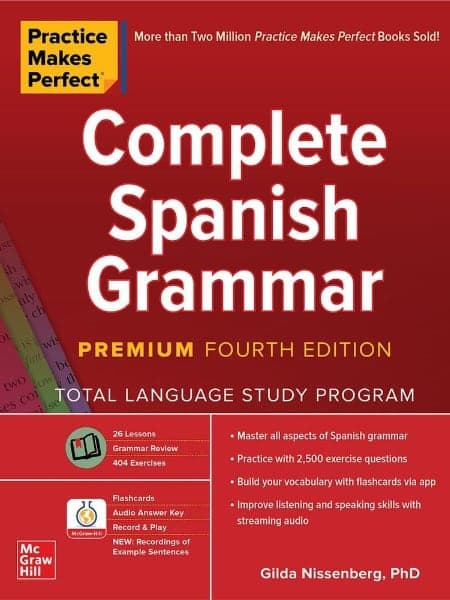
Shallow explanations, poor self-learning progression, and too-hard exercises make this only useful as a supplement.
My Review
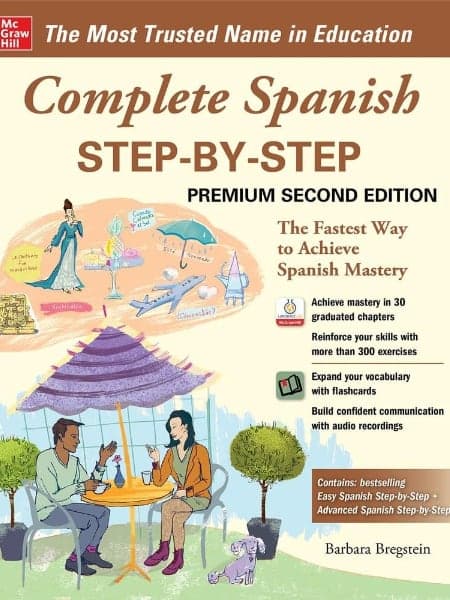
This is more of a workbook than a grammar resource and not really suited for true beginners. I don't like the progression, which plunges students into the irregular present tense by page 8. I can't think of a better way to kill someone's motivation to learn Spanish.
It continues for 200 pages by covering every verb form up to the imperfect subjunctive before even mentioning other parts of speech and has no discussion of the alphabet, pronunciation, or stress. Explanations are often only a couple sentences, more just a declaration of how things are done before throwing you into sets of exercises that assume you have a vocabulary and grammar knowledge of a solid intermediate student. I like that the exercises lean heavily into full sentence translations to really test and challenge its readers, but as a "beginner" grammar text, it has to be handled with some tact to not be overwhelming. This book seems to have no idea what it's like to be a real beginner.
On the plus side, I like the layout - lots of white space, large pages, generally pleasant to look at and work through. This isn't a bad choice if you're looking for a supplement with lots of exercises, but the actual instruction is just too shallow for this to be your primary resource.
Like other McGraw Hill books on this list, this one claims to have a companion app. No one online seems to like it or be able to use it, though I did not try it myself.
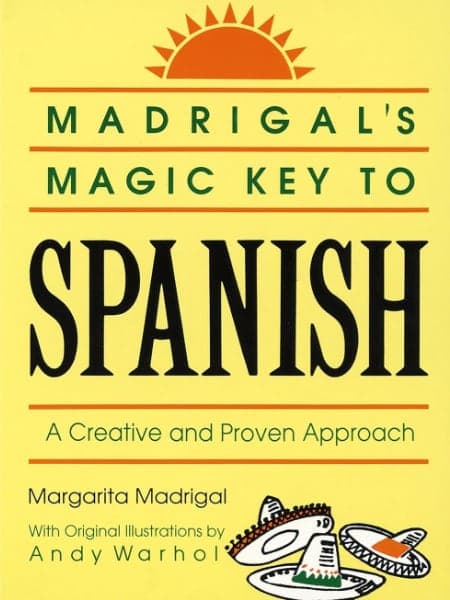
I do not recommend this book to anyone who is serious about learning Spanish.
My Review
So, I originally bought this book a couple years ago when I saw it repeatedly praised online for being an unconventional, but exceptional Spanish self-learning book. I liked the quirky title and the fact it had some illustrations drawn by Andy Warhol before he got famous. After reading the first 50 or so pages, I promptly returned it in disgust.
Two years later, I'm preparing to write these reviews you are currently reading. I do some research - again, I see this book praised and recommended online. Okay, surely I missed something. I order it again, prepare myself to dive in with a more open mind and generous heart.
Listen, these are my sincere reviews so I'm going to be honest with you. I don't understand how anyone considers this a serious resource, much less a praiseworthy one. Andy Warhol's participation tends to make me think the Illuminati is involved. The whole thing is a psy-op.
First, this thing is outdated. The last edition was published in 1989, but it was originally released in 1951. Second, the "magic key" is recognizing cognates (teléfono means telephone!). Third, it pretends tú doesn't exist until the last chapter. Fourth, I appreciate the effort to explain grammar in an unconventional way, but more often than not it only provides a shallow insight at the expense of real understanding. For example, it explains the "formation" of the infinitive as a derivative of the preterite (what?). In an attempt to make Spanish "easy," it employs cute tricks that leave its readers ignorant to how anything actually works.
The one thing I appreciate about this book is the author's casual prose, encouraging tone, and attempt to build a sort of instructional narrative. I think many resources would really benefit from incorporating those features; unfortunately, it's just paired with a lousy approach to learning Spanish in this case.
Strengths
Casual, encouraging prose
Weaknesses
Outdated
Ignores tú
Obsession with cognates
Superficial, shallow treatment of Spanish grammar
Some Questions
Is a grammar book enough to learn Spanish?
You won't be able to fluently speak Spanish by just reading a grammar book. But, while there are many different opinions on the best way to learn a language, you will almost certainly benefit from some amount of grammar study. You don't have to puzzle out how the past tense or subjunctive work on your own - a good tutorial can explain them to you quickly and clearly.
Learning a language requires a ton of input (listening and reading), as well as focused practice actually speaking in the real world. But learning how Spanish works - its grammar - is essential to efficiently progress.
Should I use a grammar book instead of an app?
Apps are great for staying motivated and spending your time interacting with a language instead of doom-scrolling Instagram. Some apps are genuinely useful tools - like a spaced-repetition app that helps you efficiently memorize vocabulary.
In defense of the "boring" grammar book: learning a language is challenging. Sometimes it pays to slow down, put the phone on silent, and work your way through a clear, detailed explanation without earning points or filling a progress bar. The quick grammar tips offered in many apps often feel insufficient - purposefully brief to avoid scaring off casual users.
Do I need a separate Spanish verb book?
I didn't review any phrase or verb books - I don't think they're worth your time. First, because you can find this information for free online. Second, because I think a better strategy is to find vocabulary and phrases you'd like to learn by reading, listening, and watching content that interests you.
Can I learn Spanish grammar online for free?
Yes! There is a wealth of free websites, YouTube videos, and AI chatbots that you can use to learn Spanish grammar for free. I also maintain a free Spanish grammar reference on this site.
I think the value of a good grammar resource is the compilation and guided progression through knowledge, exercises, and examples. I think many of the resources on this page offer that exceptionally well and are worth the price, but a sufficiently motivated student is definitely capable of teaching themselves Spanish grammar for free in 2026.
Where can I find native input to listen to while I work through a book?
I highly recommend building a routine of listening to native Spanish as early as you can. There's a whole genre of Spanish resources called comprehensible input that are simplified and slow down to be more useful to beginners.